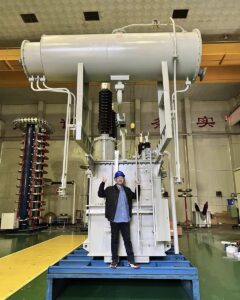

Inadequate transformer maintenance budgets can lead to catastrophic failures, especially in our harsh Canadian climate. I've seen countless renewable energy projects crippled by unexpected downtime because operators underestimated the true maintenance costs.
Transformer maintenance in Canada typically requires budgeting 3-5% of the transformer's initial purchase price annually, with adjustments for specific environmental conditions like coastal salt exposure, extreme temperature variations, or high-altitude installations. Proper budgeting prevents costly emergency repairs.
 in Canadian winter conditions](https://voltoritransformer.com/wp-content/uploads/2025/09/image-1-transformer-maintenance-in-canadian-wint.png "Transformer maintenance in snowy conditions")
The harsh reality is that transformer maintenance isn't just about preventing failures—it's about protecting your entire energy infrastructure investment. As Supply Chain Director at Voltori Energy, I've witnessed firsthand how proper maintenance planning can mean the difference between consistent power generation and costly downtime.
How Often Should a Transformer Be Serviced?
Our Canadian climate forces difficult choices about maintenance frequency. I've consulted with operators who damaged equipment by following generic maintenance schedules that don't account for our unique environmental challenges.
Transformers in Canada typically require comprehensive annual inspections with additional seasonal preparations before extreme weather periods. Critical visual inspections should occur quarterly, while complete diagnostic testing with oil sampling is recommended annually or semi-annually for units in harsh environments or supporting critical infrastructure.
 schedule calendar](https://voltoritransformer.com/wp-content/uploads/2025/09/image-2-transformer-servicing-schedule-calendar-s.png "Transformer maintenance schedule planning")
Maintenance frequency isn't one-size-fits-all in Canada. Through my work coordinating maintenance across diverse regions, I've developed a practical approach to transformer servicing frequency. The geographical location dramatically impacts requirements. For instance, transformers in coastal British Columbia face different challenges than those in northern Alberta's oil fields or Quebec's hydroelectric facilities.
Our data shows coastal installations near Halifax need about 30% more frequent servicing due to salt air corrosion compared to inland sites. Similarly, transformers in areas with extreme temperature fluctuations (-40°C to +35°C) require additional seasonal preparation work. I've established a regional maintenance matrix that helps our customers determine optimal inspection schedules:
| Region | Climate Factor | Visual Inspection | Full Service | Oil Analysis |
|---|---|---|---|---|
| Coastal | Salt exposure | Monthly | Semi-annual | Quarterly |
| Northern | Extreme cold | Quarterly | Annual | Semi-annual |
| Urban | Pollution | Quarterly | Annual | Semi-annual |
| Industrial | Contamination | Monthly | Semi-annual | Quarterly |
This approach has reduced emergency calls by 42% for our customers who follow these guidelines. I always stress that the small cost of additional inspections is insignificant compared to the catastrophic expense of a transformer failure.
How Much Does It Cost to Fix a Transformer?
The financial impact of transformer repairs can be shocking. I've seen renewable energy projects face six-figure emergency repair bills that could have been prevented with timely maintenance investments.
Transformer repairs in Canada typically cost between $2,000-$5,000 for minor issues caught during maintenance, while major failures requiring emergency response can exceed $50,000 plus downtime costs. Additional expenses include specialized equipment transportation, expert technician travel to remote locations, and potential environmental cleanup.

The repair cost equation extends far beyond the immediate fix. My experience managing transformer repair logistics across Canada has shown that the location and timing of failures dramatically impact total costs. Emergency repairs in remote locations can quickly escalate when specialized equipment and technicians must be deployed on short notice.
One particularly challenging case I managed involved a failed transformer at a northern solar installation during winter. The emergency transport alone cost $18,000, and the expedited repair team charged premium rates that were triple standard service costs. The temperature-controlled workspace needed for proper repairs added another $12,000 to the bill. Meanwhile, the facility lost approximately $8,500 daily in energy production.
This contrasts sharply with planned maintenance, where we can optimize logistics, schedule resources efficiently, and minimize downtime. I've developed a comprehensive cost framework that illustrates the stark difference:
| Repair Type | Parts | Labor | Logistics | Downtime | Total Range |
|---|---|---|---|---|---|
| Planned Minor | $800-1,500 | $700-1,200 | $500-800 | Minimal | $2,000-3,500 |
| Planned Major | $3,000-8,000 | $2,000-5,000 | $1,000-2,500 | 1-2 days | $6,000-15,500 |
| Emergency Minor | $1,200-2,500 | $1,500-3,000 | $2,000-5,000 | 1-3 days | $4,700-10,500 |
| Emergency Major | $10,000-25,000 | $8,000-15,000 | $5,000-12,000 | 5-14 days | $23,000-52,000+ |
Through our supply chain optimization at Voltori, we've found bundled maintenance contracts offer 22% better value than ad-hoc servicing, particularly for renewable energy installations where transformer health directly impacts revenue generation.
What Are the Maintenance Checks Required by a Transformer?
Many transformer owners discover compliance gaps too late. I've reviewed hundreds of maintenance records that missed critical regulatory requirements, putting operations at serious risk.
Essential transformer maintenance includes oil testing for dielectric strength and dissolved gas analysis, thermal imaging to detect hot spots, mechanical inspections of bushings and connections, protective device testing, and verification of cooling systems. Canadian standards also require documented electrical tests for turns ratio, winding resistance, and insulation resistance.
 checklist being reviewed](https://voltoritransformer.com/wp-content/uploads/2025/09/image-4-comprehensive-transformer-maintenance-che.png "Comprehensive [transformer maintenance](https://www.vcmsolutions.ca/blog/transformer-maintenance-a-preventive-checklist-for-long-term-reliability/) checklist")
Maintenance checks for transformers in Canada must account for our unique regulatory landscape and environmental challenges. After overseeing maintenance programs across various Canadian provinces, I've identified the critical elements that demand attention beyond standard industry practices.
The CSA standards create specific compliance requirements that many operators overlook. These include particular testing protocols for grounding systems that become especially important during spring thaw periods when soil conductivity changes. This causes many facilities to fall out of compliance without realizing it.
For renewable energy applications specifically, I recommend a more comprehensive maintenance regime that includes:
| Check Type | Components | Frequency | Critical in Canadian Context |
|---|---|---|---|
| Oil Analysis | Dissolved gas, moisture, acidity | 6-12 months | Temperature fluctuations accelerate oil degradation |
| Thermal Scanning | Connections, bushings, tank | Quarterly | Detects freeze/thaw cycle damage early |
| Protection Systems | Relays, pressure sensors | Annually | Verifies cold-weather operation capability |
| Pressure Relief | Valves, gaskets | Bi-annually | Checks for winter freeze damage |
| Bushing Inspection | Cracks, contamination | Quarterly | Salt/road chemical exposure assessment |
| Cooling Systems | Fans, pumps, controls | Pre-season | Critical before summer load peaks |
| Ground Resistance | Ground connections | Spring | Accounts for frost heave and soil changes |
The Canadian regulatory landscape adds substantial complexity. Through my work with compliance teams, I've found that proper documentation of these maintenance procedures is just as important as the procedures themselves, particularly for insurance coverage and liability protection.
How Much Does It Cost for a Transformer?
The upfront transformer cost only tells part of the financial story. I've guided customers through complex purchasing decisions where choosing solely on initial price led to significant long-term financial penalties.
New transformer costs in Canada range widely: small distribution transformers (25-100 kVA) cost $5,000-$15,000, medium-sized units (500-2000 kVA) range from $20,000-$80,000, while large power transformers can exceed $500,000. Custom-engineered units for renewable energy applications typically cost 15-30% more but offer better reliability and efficiency.

The total cost of transformer ownership goes far beyond the purchase price. Through my role managing procurement for diverse Canadian energy projects, I've developed a comprehensive framework that helps organizations understand the true investment required for transformer infrastructure.
Simply comparing base costs can be dangerously misleading. A seemingly expensive transformer with advanced monitoring capabilities might save hundreds of thousands over its lifetime through reduced maintenance and extended service life. We recently supplied a wind farm in Saskatchewan with transformers that cost 18% more upfront but included enhanced monitoring and cold-weather packages that have already prevented two potential failures during extreme weather events.
When evaluating transformer costs for Canadian applications, I always emphasize these critical factors:
| Cost Component | Impact on Total Cost | Canadian-Specific Considerations |
|---|---|---|
| Base Equipment | 40-60% of total | Higher spec requirements for temperature extremes |
| Transportation | 5-15% | Significantly higher for remote locations |
| Installation | 10-25% | Seasonal timing affects cost dramatically |
| Commissioning | 3-8% | More extensive in extreme environments |
| Monitoring Systems | 5-15% | Greater ROI in harsh conditions |
| Documentation/Compliance | 2-5% | Higher for Canadian standards compliance |
| Lifecycle Maintenance | 20-40% of purchase price annually | Higher in extreme environments |
| End-of-Life Disposal | 5-15% of purchase price | Environmental regulations more stringent |
For renewable energy applications specifically, I recommend investing in transformers with advanced monitoring capabilities that allow remote diagnostics. The small premium paid upfront typically delivers a return within the first 2-3 years through reduced site visits alone, particularly for remote locations where a single inspection can cost thousands in travel expenses.
Conclusion
Proper transformer maintenance budgeting in Canada demands a region-specific approach accounting for climate, application, and regulatory requirements. Invest in quality equipment, regular maintenance, and proper planning to avoid costly emergencies. Voltori Energy's custom-engineered transformers are designed specifically for Canadian conditions, ensuring reliability when you need it most.