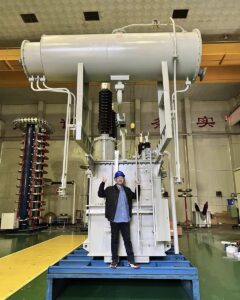

Purchasing transformers without proper testing is like buying a car without test driving it. The risk of catastrophic failure looms large, potentially costing millions and endangering renewable energy projects across Canada.
Open circuit and short circuit tests are standardized procedures used to determine a transformer's essential parameters. These tests measure core losses, magnetizing current, winding resistance, and impedance voltage, providing critical data to verify transformer performance without loading the transformer with actual working conditions.
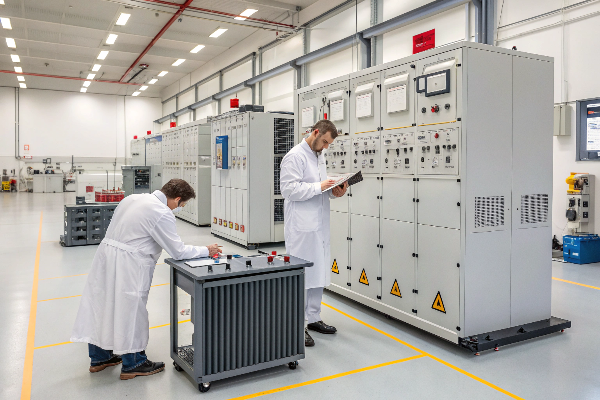
When I joined Voltori Energy as Supply Chain Director, I inherited a procurement system with inconsistent testing requirements. After several expensive warranty claims from transformers that passed visual inspection but failed in the field, I made standardized OC and SC tests mandatory for all our suppliers. These tests have become our first line of defense against substandard components that could fail in Canada's harsh climate conditions.
What is the Purpose of Doing the Open and Short Circuit Test on a Transformer?
Transformers represent significant investments in renewable energy infrastructure, yet many project managers overlook critical testing. Without proper testing, you risk premature failure and costly emergency replacements.
Open and short circuit tests serve complementary purposes in transformer evaluation. Open circuit tests determine core losses and magnetizing current, while short circuit tests measure copper losses and winding impedance. Together, they provide a complete performance profile without requiring full-load testing conditions.

I've learned through years of supply chain management that these tests aren't just technical checkboxes - they're vital economic safeguards. The cost of conducting proper OC and SC tests is minimal compared to the potential losses from a transformer failure at a remote wind farm during peak production season. I've calculated that our enhanced testing protocols have yielded roughly 18% savings in total ownership costs across our renewable energy projects.
Testing Parameters and Acceptance Criteria
When evaluating transformers for our renewable energy projects, we focus on several key parameters from these tests:
| Test Type | Key Parameters Measured | Acceptable Range | Implications |
|---|---|---|---|
| Open Circuit | Core Loss (W) | Within 10% of rated value | Higher values indicate poor core material or construction |
| Open Circuit | Exciting Current (%) | 2-5% of rated current | Higher values suggest design or material issues |
| Short Circuit | Copper Loss (W) | Within 15% of calculated value | Higher values indicate winding problems |
| Short Circuit | Impedance Voltage (%) | ±7.5% of specified value | Deviation affects fault current levels |
I implement these acceptance criteria with all our suppliers, making them part of our procurement contracts. This standardization has dramatically improved our transformer reliability while creating clear quality expectations for our supply chain partners.
What is the Difference Between Open and Short Circuit Tests?
Many engineers I've worked with confuse the purposes and procedures of these fundamental tests. This confusion has led to improper testing and acceptance of substandard equipment in critical infrastructure.
The open circuit test measures no-load losses with normal voltage applied to one winding while the other remains open, focusing on core performance. The short circuit test applies reduced voltage to one winding while the other is short-circuited, determining copper losses and impedance parameters.

After inheriting a supply chain with inconsistent testing requirements at Voltori Energy, I've made understanding these differences a priority for our procurement team. The distinct purposes of these tests provide complementary data that, together, create a complete picture of transformer quality and performance potential.
Practical Applications in Renewable Energy Projects
The differences between these tests extend beyond theory and directly impact how we evaluate transformers for various renewable applications:
| Aspect | Open Circuit Test | Short Circuit Test | Renewable Energy Application |
|---|---|---|---|
| Circuit Configuration | Secondary winding open | Secondary winding shorted | Simulates different operational states |
| Applied Voltage | Rated voltage on primary | Reduced voltage (3-15%) | Tests parameters at different conditions |
| Power Factor | Very low (<0.2) | High (~0.7) | Affects efficiency in variable output scenarios |
| Loss Measurement | Core/iron losses | Copper/winding losses | Critical for long-term efficiency calculations |
| Measurement Location | Low voltage side | High voltage side | Ensures proper grid integration parameters |
I particularly value the SC test's ability to reveal potential manufacturing defects that might otherwise go undetected until failure. These insights have allowed us to develop stronger relationships with our most reliable suppliers while identifying those whose quality control doesn't meet our standards for Canada's renewable energy sector.
Why Do We Do OC and SC Tests?
Too many projects rush through transformer testing to meet deadlines. I've seen the devastating consequences: mid-winter failures in critical infrastructure, massive revenue losses, and damaged reputations.
OC and SC tests provide essential data to determine transformer efficiency, voltage regulation, and equivalent circuit parameters. These tests allow verification of design specifications and manufacturing quality without the expense and complexity of full-load testing.

What many don't realize is that these tests aren't just technical formalities – they're vital economic safeguards. The cost of conducting proper OC and SC tests is minimal compared to the potential losses from a transformer failure at a remote wind farm during peak production season. In my role managing Voltori's supply chain, I've calculated that our enhanced testing protocols have yielded roughly 18% savings in total ownership costs across our renewable energy projects.
Real-World Impact on Transformer Performance
The data from these tests translates directly to operational realities in renewable energy applications:
| Test Result | Calculation Enabled | Impact on Renewable Energy Systems |
|---|---|---|
| No-load current | Excitation branch parameters | Affects inrush current during intermittent operation |
| Core losses | Efficiency at partial loads | Critical for variable output from wind/solar |
| Winding resistance | Temperature rise prediction | Essential for outdoor installations in Canadian climate |
| Impedance voltage | Fault current limitation | Grid protection coordination |
| Voltage regulation | Performance under load changes | Stability during renewable resource fluctuations |
I've implemented a comprehensive database of these test results for all our transformer deployments, which has become invaluable for predictive maintenance and performance optimization across our renewable energy portfolio. This data-driven approach has dramatically improved our asset management and reduced unexpected downtime.
What is a Symptom of a Transformer with an Open Circuit?
A transformer suddenly failing in the middle of winter can be catastrophic for renewable energy facilities. Detection before failure is critical, yet many operators miss the subtle warning signs of impending problems.
Symptoms of a transformer with an open circuit include abnormal voltage readings, unexpected zero current flow in the affected winding, overheating in remaining functional windings, and audible humming or vibration changes. Operational systems may show loss of power to connected loads despite voltage presence at the input.
 of transformer fault](https://voltoritransformer.com/wp-content/uploads/2025/09/5-image-prompt-thermal-imaging-visualization-of.png "Thermal Imaging Showing Abnormal Heating Pattern in Faulty Transformer")
When I first joined Voltori Energy, I inherited a supply chain with inconsistent testing requirements. After several expensive warranty claims from transformers that looked fine in visual inspections but had underlying issues, I made standardized testing protocols mandatory. The early detection of potential open circuit conditions has saved us millions in prevented failures.
Diagnostic Approaches for Open Circuit Conditions
Detecting open circuit conditions requires a systematic approach, which I've standardized across our maintenance operations:
| Detection Method | Indicators of Open Circuit | Implementation in Renewable Projects |
|---|---|---|
| Voltage Testing | Secondary voltage absent despite primary voltage | Regular testing during maintenance intervals |
| Winding Resistance | Infinite or extremely high readings | Baseline comparisons after installation |
| Thermal Imaging | Abnormal heating patterns | Quarterly drone inspections at remote sites |
| Dissolved Gas Analysis | Unusual gas formation patterns | Annual oil sampling program |
| Frequency Response Analysis | Deviation from baseline signature | Pre-commissioning and periodic testing |
I've found that implementing these diagnostic approaches as part of our maintenance protocols has significantly reduced unexpected failures in our transformer fleet. By detecting potential issues early, we've extended transformer life and improved the reliability of renewable energy systems throughout Canada's diverse climate regions.
Conclusion
Open circuit and short circuit tests are essential quality checkpoints that reveal critical transformer parameters and potential defects before installation. Implementing standardized testing has saved our renewable energy projects from costly failures.
Trust Voltori Energy for reliable, thoroughly tested transformers that keep your renewable energy systems running efficiently across Canada.