
As a Supply Chain Director managing renewable energy projects, I constantly see companies struggle with understanding transformer types, often leading to costly project delays and budget overruns. The confusion between distribution and power transformers is particularly problematic.
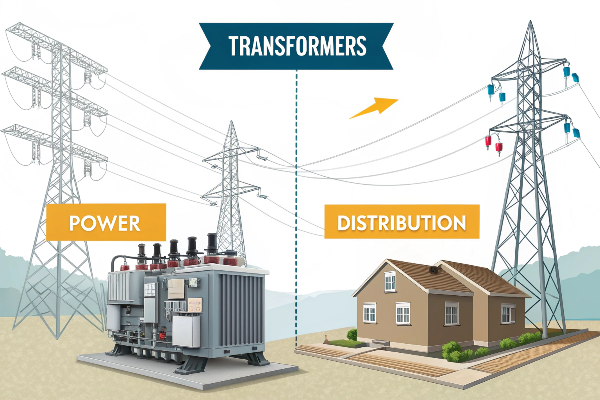
Distribution transformers operate at lower voltages (below 35kV) and capacities (under 5MVA), while power transformers handle higher voltages (above 69kV) and greater capacities (typically 10MVA+). Distribution transformers serve end-users, while power transformers connect generating stations to transmission networks.
The differences between these transformer types impact everything from project timelines to maintenance strategies. My experience sourcing these critical components across Canada has taught me that understanding these distinctions isn't just technical trivia—it's essential knowledge that affects project economics, timeline planning, and long-term operational success.
What Is the Difference Between a Power Transformer and a Distribution Transformer?
When managing renewable energy supply chains, I frequently encounter confusion about transformer specifications that can derail project timelines and inflate costs unnecessarily. Understanding the fundamental differences is critical.
Power transformers operate at transmission-level voltages (69kV-765kV), handle large power capacities (often 10MVA+), and connect power plants to transmission networks. Distribution transformers operate at lower voltages (below 35kV), have smaller capacities (typically under 5MVA), and deliver electricity to end-users from distribution networks.
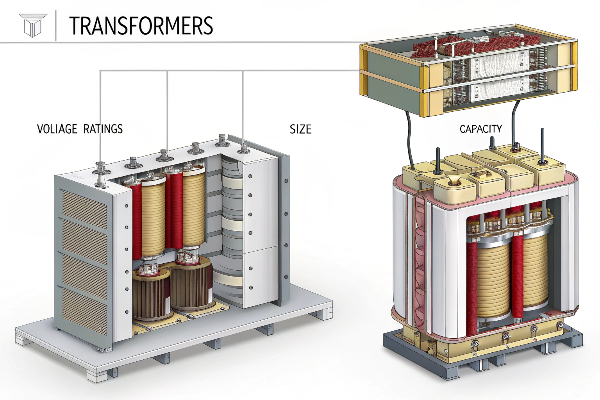
Beyond these basic specifications, I've noticed significant cost implications in our project planning. For a recent 50MW solar farm project in Alberta, the 115kV power transformer represented nearly 8% of total project cost ($1.2M), while multiple 24.9kV distribution transformers collectively accounted for only about 3% ($450K), despite handling similar overall capacity.
This cost difference affects our inventory and procurement strategies dramatically. At Voltori, we maintain a small stock of standardized distribution transformers (particularly 24.9kV/480V units common in Canadian solar applications) to accommodate urgent project needs. However, power transformers are exclusively ordered on a project basis due to their high cost and customized specifications.
The manufacturing requirements also create supply chain challenges. Power transformers need specialized facilities with heavy lifting capabilities and extensive testing equipment, limiting our supplier options significantly. Distribution transformers can be sourced from a wider vendor base, giving us more negotiating leverage. This difference has led me to develop separate supplier qualification protocols for each category to balance quality and cost effectively.
Manufacturing Comparison
| Aspect | Power Transformers | Distribution Transformers |
|---|---|---|
| Manufacturing Complexity | Highly specialized, limited facilities | More standardized, wider manufacturing base |
| Lead Times | 12-18 months | 3-6 months |
| Testing Requirements | Extensive factory acceptance testing | Standardized routine tests |
| Transportation | Special permits, route planning required | Standard freight options |
| Customization Level | Highly customized for specific applications | Often available in standard ratings |
What's the Difference Between Power Transmission and Distribution?
In my supply chain planning, I constantly face the challenge of aligning transformer specifications with their intended use in either transmission or distribution systems. This distinction drives many of our procurement decisions.
Power transmission involves moving large amounts of electricity at high voltages (69kV and above) over long distances from generation facilities to substations. Power distribution involves delivering electricity at lower voltages (under 35kV) from substations through distribution lines to end users like homes and businesses.
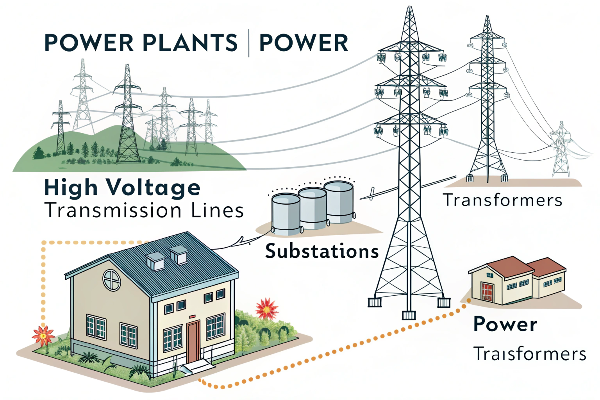
The practical impact of this difference shapes our entire approach to project planning. Transmission components—including power transformers—require significantly more lead time. When coordinating procurement for solar and wind installations across Canada, I've noticed that lead times for custom power transformers can be 12-18 months, versus just 3-6 months for distribution units.
This timing difference dramatically impacts project planning and financial forecasting. In one western Canadian wind project, a three-month delay in power transformer delivery pushed the entire commercial operation date, costing approximately $1.8M in lost revenue. This taught me to build substantial buffer times into transmission component scheduling.
Transportation logistics also differ dramatically. Distribution transformers can often be shipped using standard freight options, while power transformers frequently require specialized transport permits, escorts, and route planning. For a recent project in northern British Columbia, the transportation plan for the main power transformer took almost as long to develop as the distribution system design itself. The specialized transportation added nearly $85,000 to the project cost and required coordination with provincial transportation authorities for road closures.
System Comparison
| Characteristic | Transmission System | Distribution System |
|---|---|---|
| Voltage Levels | 69kV-765kV | Below 35kV |
| Distance Covered | Long distances (100+ km) | Shorter distances (<20km) |
| Infrastructure | Large towers, heavy conductors | Poles, lighter conductors |
| Losses | Lower percentage losses | Higher percentage losses |
| Redundancy | N-1 or N-2 redundancy | Limited redundancy |
| Transformer Types | Power transformers | Distribution transformers |
What Are Distribution Transformers Used For?
In my work overseeing renewable energy supply chains, I regularly see project developers underestimate the importance of distribution transformers, leading to system integration challenges and operational inefficiencies.
Distribution transformers are used to convert medium voltage electricity from distribution lines (typically 4kV-35kV) down to utilization voltages (120V-600V) for residential, commercial, and light industrial applications. They serve as the final voltage transformation point before electricity reaches end users.
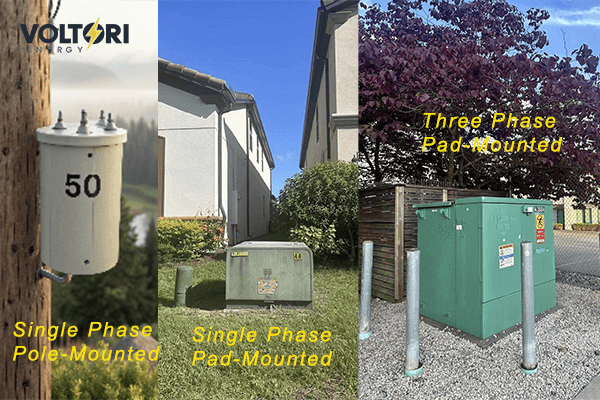
The applications for distribution transformers are surprisingly diverse across our renewable energy projects. In solar farms, we typically use pad-mounted distribution transformers to step up voltage from solar inverter outputs (often 480V) to collection system voltages (usually 24.9kV in Canadian installations). For wind projects, we place distribution transformers within or adjacent to each turbine tower to step up generator voltage to collection system levels.
From a supply chain perspective, I've found that distribution transformer failures create different challenges than their larger counterparts. When a distribution transformer fails at a customer site, we can typically source a replacement within 4-6 weeks. However, when we had a power transformer failure at our Manitoba wind project last year, the replacement timeline extended to 14 months, requiring costly temporary solutions.
This reliability difference has shaped our approach to spares and maintenance. We've established different inventory strategies for each type. For critical solar and wind installations, we often recommend keeping spare distribution transformers on-site, something that would be economically impractical with power transformers.
The domestic versus international sourcing dynamics are markedly different too. We source approximately 60% of our distribution transformers from Canadian manufacturers, but for larger power transformers, we often must look to specialized European or Asian manufacturers. This introduces additional supply chain complexities like currency hedging, international shipping insurance, and import compliance management that significantly impact project timelines and budgets.
Application Comparison
| Setting | Typical Distribution Transformer Type | Common Ratings | Installation Location |
|---|---|---|---|
| Residential Areas | Pole-mounted or pad-mounted | 25-100 kVA, 7.2kV/120/240V | Utility easements, residential streets |
| Commercial Buildings | Pad-mounted or vault-type | 150-2500 kVA, 12.47kV/208Y/120V | Service rooms, exterior pads |
| Solar Farms | Pad-mounted | 500-2500 kVA, 480V/24.9kV | Adjacent to inverter stations |
| Wind Turbines | Dry-type or liquid-filled | 1000-4000 kVA | Within turbine structure or adjacent pad |
| Light Industrial | Pad-mounted or unit substation | 750-3000 kVA, 24.9kV/480V | Factory grounds, dedicated electrical rooms |
Why Is the Transformer Called DP?
As someone who manages transformer procurement daily, I often hear technical abbreviations that cause confusion among project teams and stakeholders, with "DP" being among the most misunderstood terms.
DP stands for "Distribution Pole-mounted" transformer, referring to distribution transformers designed specifically for mounting on utility poles. These are commonly seen in residential areas and rural settings where overhead distribution is prevalent.
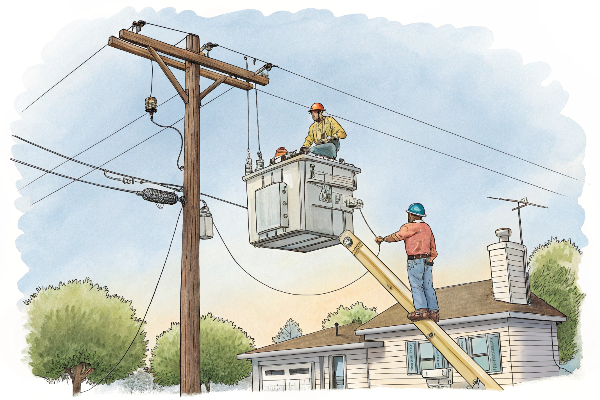
The terminology around transformers reflects both their function and mounting configuration. In our procurement documentation and inventory systems, we use several standard abbreviations that help specify exactly what we need. Understanding these codes is essential when sourcing components for renewable energy projects.
I've found that terminology confusion can lead to costly procurement mistakes. Last year, a project developer requested "DP transformers" for a solar installation, but actually needed pad-mounted units. The mistake wasn't caught until delivery, causing a three-week delay while proper transformers were sourced.
This experience taught me to implement a standardized naming convention across all our project documentation. We now use a comprehensive coding system that specifies transformer type (power or distribution), mounting style, insulation medium, and key electrical parameters.
The naming distinctions are especially important in Canadian installations where environmental considerations come into play. For northern projects where temperatures can reach -40°C, we must specify cold-climate insulating oils or dry-type designs. Our coding system now includes climate suitability markers that prevent inappropriate specifications.
Beyond DP (Distribution Pole-mounted), other common designations include DPM (Distribution Pad-Mounted), DSS (Distribution Substation Service), and PT (Power Transformer). Each has specific design characteristics that make them suitable for particular applications. Understanding these distinctions helps ensure we source exactly the right equipment for each unique renewable energy project we support.
Transformer Type Coding
| Code | Full Term | Typical Applications | Mounting Location |
|---|---|---|---|
| DP | Distribution Pole-mounted | Residential overhead lines | Utility poles |
| DPM | Distribution Pad-Mounted | Underground residential, commercial | Ground level concrete pad |
| DSS | Distribution Substation Service | Small substations, large commercial | Substation yard |
| DT | Distribution Transformer (general) | Various distribution applications | Various |
| PT | Power Transformer | Transmission/generation interface | Substation foundation |
| GSU | Generator Step-Up | Power plant output | Generation station |
Conclusion
Understanding the differences between transformer types is essential for successful renewable energy project planning, from voltage ratings to supply chain implications. These distinctions directly impact project economics, timelines, and long-term reliability.
At Voltori Energy, we design custom power transformers for your renewable energy projects, ensuring reliability while meeting all Canadian electrical standards.